Woad (Isatis tinctoria)
You might like these instead
£2.99Pack of 3 plants: Rupturewort (Green Carpet) - Herniaria glabra

£8.00Salad Burnet (Sanguisorba minor)

£6.00Wood Avens (Geum urbanum)

£6.00
|
Get big discounts when you order multiple items
|
❤️ Why you'll love it
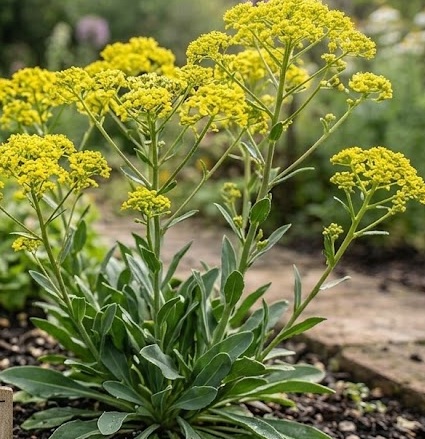
The ancient blue dye plant of the Britons, grown for centuries to produce a rich indigo pigment from its leaves. A hardy biennial with cheerful yellow flowers in its first summer, followed by drooping black seed pods.
🌿 Details
How to grow Woad (Isatis tinctoria) in the UK
Position & Light:
Grow in full sun in an open position. Woad is the ancient blue dye plant of the Britons, a hardy biennial with a rosette of blue-green leaves in the first year and tall, branching stems of small, bright yellow flowers in the second year, followed by hanging, dark purple-black seed pods. It suits dye gardens, herb gardens, cottage gardens, borders and wildlife gardens.
Soil & Watering:
Plant in fertile, well-drained soil, ideally neutral to alkaline. Woad grows a deep taproot, so it dislikes root disturbance and heavy, wet soil. Water regularly after planting until established, then only in prolonged dry spells. Mulch with compost to retain moisture.
Feeding:
Woad is a hungry plant for leaf production. Apply a balanced or high-nitrogen fertiliser, or a mulch of well-rotted compost, in spring if you are harvesting leaves for dye.
Pruning & Maintenance:
For dye, pick the leaves from the rosette in the first year, from early summer to autumn, taking the outer leaves and leaving the growing centre so the plant can regrow. In the second year, plants send up tall flower stems, which look beautiful in the border. Woad self-seeds very readily, so cut off the seed heads before they ripen if you do not want it to spread, or leave some to self-sow for next year. Support tall flower stems in exposed gardens. The leaves are used to make blue dye, but are not for eating.
Common Problems:
- Self-seeding: Seeds very freely. Cut seed heads before they ripen and remove unwanted seedlings.
- Flea beetle: Tiny holes in leaves. Keep the soil moist and cover young plants with fine mesh.
- Poor establishment after moving: Resents root disturbance. Plant carefully in its final position.
- White blister rust and mildew: Can occur in damp conditions. Remove affected leaves and allow air circulation.
- Slugs and snails: Young plants are vulnerable. Protect in spring.
Supplied bare root, carefully packed with a moisture source to ensure freshness.
Plant height: approximately 10cm.
Please remember that most plants (except Evergreens) are dormant in Autumn/Winter so your order may have no leaves until Spring.
🪴 What Does Bare Root Mean?
Our plants have their full root systems but are carefully removed from the pot and soil before delivery.
The roots are wrapped in moist material and eco-friendly packaging to keep them fresh during transit.
It's less messy, reduces waste, and allows the plant to settle into your garden more easily once planted.
🌱 Sustainably Grown in Britain
Plants are sustainably grown and harvested at our nursery in the South West UK, without the use of pesticides or herbicides.
Packaged using biodegradable materials for an eco-conscious delivery.
📜 Certified & Compliant
We are APHA-authorized for Plant Passports: your assurance that our plants are healthy, pest-free, and meet UK plant health regulations.
🚚 Combined Postage & Fast Dispatch
No extra delivery charge when you buy multiple plants from us! Simply add all the plants you love to your basket and pay one flat delivery fee at checkout.
Shipped via UPS Express, so they are in transit for less than 24 hours: includes care cards tailored to each plant you order.
Orders are sent out at the beginning of each week to reduce time in transit,
see Delivery information.
📌 Planting Advice
Upon arrival, plant immediately in a cool, shaded spot (indoors or outdoors) and water thoroughly.
Once new growth appears, move to the final growing location.
💚 Our Guarantee
If your plant doesn't survive delivery*, just send us a photo and we'll send a replacement (or issue a refund).
No hassle, no worries.
* provided you accept the first delivery attempt